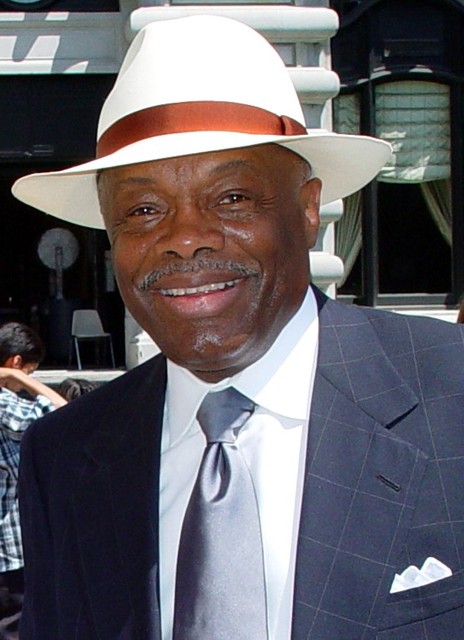
The Senate violated their own rules on renaming structures after living people, so they could name it after a politician that did nothing for the bridge, instead of naming it after the man who first proposed he bridge.
the monkeys know all
The Senate violated their own rules on renaming structures after living people, so they could name it after a politician that did nothing for the bridge, instead of naming it after the man who first proposed he bridge.
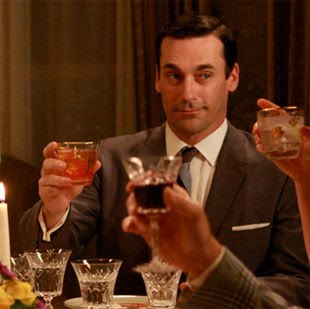
I present to you, the 1991 Clio Awards.
Attendees who had paid the $125 admission price did not have tickets waiting at the door, as promised. Also missing were any Clio officials and Clio President Bill Evans. The event did not start on time; in fact, people stood around drinking, schmoozing, and trading rumors about Evans and the Clio organization for over two hours. Finally, the lights dimmed and the band started playing. A man walked up to the microphone and began to speak. He identified himself as the caterer and announced that the master of ceremonies was a no-show, but that he would give it a shot. It started out well, but after being informed that there was no script and no winners list, he gave up and walked off. A second fellow walked onstage and began talking, but was not a polished speaker; it was obvious that he was inebriated. Print ads were the first awards, and there were transparencies of the winning entries. As each image appeared on screen, the owner of the work was asked to come to the stage, pick up their Clio, and identify themselves and their agency. When the last award in the category was dispensed, the band began playing an interlude, and the emcee began singing. The audience began booing and throwing dinner rolls, and the drunk staggered offstage. Several minutes passed, but no one took his place. As the people began to leave, one man mounted the stage, strode to the table of remaining statuettes, snatched one up, and waved it as he left the stage. Two other individuals claimed their own awards; then suddenly, the stage was stampeded by a feeding frenzy of advertising executives, intent on the Clios that remained.
The event for television commercials, scheduled a few days later, was called off when the Clio Company didn’t come up with cash for the facility’s deposit.
The story behind the 1991 fiasco slowly emerged. Bill Evans began to delegate all responsibility for the Clios to his 11-person Clio staff in 1989. Although he had stopped coming to the office, he continued to spend money at an alarming rate. Bills weren’t being paid, and Evans would not return phone calls from the Clio office. Privately, the staff was worried about Evans’ alleged drug addiction. He was offered loans if he would surrender financial control of the Clios, but he refused. After 3 people were arrested at Evans’ home on drug charges, drug rumors escalated. At the end of April 1991, the Clio Company was broke. After going unpaid for most of May, the staff, which included Evans’ daughter, walked out.

Martin Aircraft, the ducted fan “jetpack” people, have announced that the Civil Air Authority of New Zealand, is now allowing manned test flights of their “jetpack”, but only if they stay below 6 meters (~20 feet), and remain in uninhabited areas.
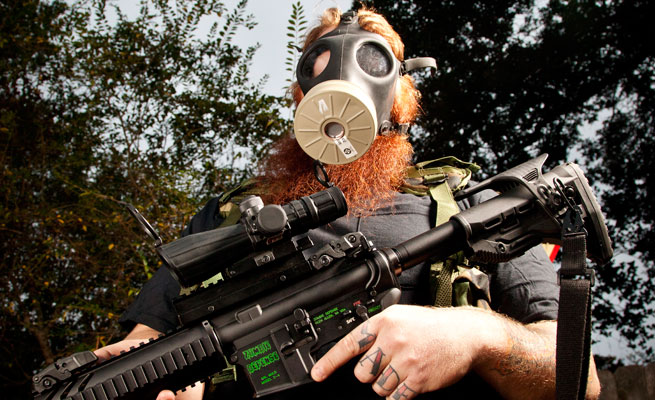
Since I’ve been updating our survival pack, I’ve been doing a lot of reading online about 72 hour packs. From what I can tell, there are basically two sources of information. Government emergency management agencies, such as San Francsico’s, and survivalist / “prepper” websites. The professional sites suggest you purchase different items, but if you want a review and comparison of the different choices, you’re stuck with the survivalist sites, or at least that what shows up when you google “survival packs” and “72 hour bags”.
Reading survivalism formus is like taking a trip to a parallel world, that is both strange and familiar at the same time. One minute they’re reviewing pocket water filters and reading topgraphical maps, the next minute it’s secret DHS armies.
Several years ago, I went out and bought a 2 person 72 hour bag at OSH. I augmented the pack with a few items (marked in italics below). At the time, I thought it wasn’t bad, but now that I look at it, it seems woefully under stocked.
First Aid Kit
We also have an Eton FR-500 emergency radio.
So what’s wrong with this pack? First, its for two people, and there is three of us. Second, the water packets urge 4 packets per day per person. That means there’s only enough water for 1 person for 72 hours. That’s a major flaw in this pack. If worse came to worst, you are going to end up dehydrated. Third, the pack doesn’t contain toiletries for Maximilian, which is a concern for a kid his have. Finally, there’s not enough medicine, and not enough of the right kinds of medicine. This first aid packet is set up for headaches and scratches. It seems like a disaster first aid pack should at least contain gauze and tape to bandage wounds.
So what do we need? Well, without getting very exotic.
Our baby bag typically already contains most of the toiletries, but its usually only set up for a few hours. For 72 hours, we’d probably need 9 to 12 diapers, a box of wipes, and a tube of balm. It’s not that big of a deal; and over the months, we’ve learned to keep it stocked, if for no other reason than convenience.
But what about the other things? The first aid kit and the food? I don’t know what we need just yet. I do know that we need a different backpack though. There isn’t any more room in the bag we have.

This is the most powerful piece of art as social commentary I’ve come across in a while.
Every year, millions of male chicks are killed, usually by gas or by feeding them into a high-speed shredder. It is inefficient to raise males to adulthood, as they cannot lay eggs. Tinkerbell [aka Looove Tinkerbell], an artist and advocate for animal rights, decided she had to speak out against this.
In 2007, she purchased 61 male chicks (pictured above) from one of these facilities and brought them into a gallery along with a shredder. She announced that they were for sale, and that the ones that were not purchased by the end of the sale would be fed into the shredder. By the end of the sale, less than a dozen had sold. When it became clear that the artist was not bluffing, the gallery owner purchased the rest. The gallery owner was unable to care for them herself, so she gave them to the police, who gave them to a shelter, who gave them back to the original farm, where they were shredded.
Unsurprisingly, Tinkebell has received hundreds of thousands of emails and letters about this and other pieces. However, that the mail would be directed at her is an interesting phenomenon. She did not kill any of the chicks; in fact, she offered a chance to save them. Perhaps it was her willingness to kill them in public that was so offensive; we like to pretend situations like this don’t exist.
I would compare this to the “Trolley Problem” in psychological research. The “Trolley Problem” is a hypothetical scenario in which a person is able to pull a lever, redirecting a train from one track on which lies five people to one on which one person lies. Most respondents would pull that lever.
The “fat man” variation is more troubling for most. This variation specifies that a person is able to slow a train down by pushing a fat man onto the train tracks, which would slow it down before reaching the five people on the tracks. Practically, the scenarios are equivalent (one person dies to save five) but it feels very different. The difference is in the act itself. We are fine with allowing people to die, but killing is another story, even if the end result is exactly the same.
I think that this active/passive dichotomy is why Tinkebell receives so much hatred from the animal rights community. As a society, we’re more accepting of a company that kills millions of chicks every year than a woman who gave the opportunity to save a few dozen before returning them to their fate.
The Trolley Problem is an interesting comparison, and I do think there’s something to this line thinking, but when I read about this I immediately thought of executions instead. The idea that these chicks would be tossed live into a wood chipper isn’t what offended the gallery owner, it’s that the were going to be tossed into the wood chipper in front of an audience.
Executions, or to use a less euphemistic term: state sanctioned homicide, were performed in town squares in front of large audiences since the beginning of time. No doubt to spread fear and to intimidate the populous. Eventually, these spectacles became entertainment. (On a personal note, my fifth grade teacher, Mrs. Fuller, talked about her father and a friend of his attended the the hanging of Charlie Birgir. It was the big event in Southern Illinois, and they left early and brought a picnic lunch in order to get a good spot. She wanted to go too, but her father wouldn’t let her. Apparently watching a man die wasn’t appropriate for a little girl.) This is unseemly. The “carnival in Owensboro” has been credited with ending public executions in the United States. Now in the “civilized” world where the practice continues, they’re performed behind closed doors with only few witnesses. In Japan, executions occur in secret. In China, the occur behind prison walls with rarely more than only prison officials watching. “Barbaric” societies on the other hand, like Saudi Arabia, Yemen, Iran, North Korea, Taliban Afghanistan, and other areas ruled by warlords have audiences. Don’t burn someone at the stake. Don’t behead them. Don’t bash someone’s head in with a rock. Don’t hang them. Make it photogenic. Make it look like they’re just falling asleep. Don’t make us face the cruel truth of what we do and allow to happen. And above all, don’t make us face the ugly reactions to this in our society. We’re civilized and better than blood thirsty savages.
This is a delusion, and Tinkerbell called society out on it.
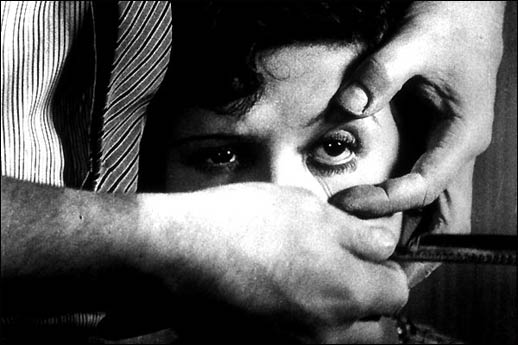
In the 1950s and 1960s, the CIA supported abstract expressionist art.
“Regarding Abstract Expressionism, I’d love to be able to say that the CIA invented it just to see what happens in New York and downtown SoHo tomorrow!” [former CIA case officer Donald Jameson] joked. “But I think that what we did really was to recognise the difference. It was recognized that Abstract Expressionism was the kind of art that made Socialist Realism look even more stylised and more rigid and confined than it was. And that relationship was exploited in some of the exhibitions.
“In a way our understanding was helped because Moscow in those days was very vicious in its denunciation of any kind of non-conformity to its own very rigid patterns. And so one could quite adequately and accurately reason that anything they criticised that much and that heavy-handedly was worth support one way or another.”
Essentially, the CIA secretly funded traveling art shows, such as 1958’s “The New American Painting”, in order to highlight the freedom of expression in the Western world compared to enforced conformity of the communist block. No artists were paid for work, and artists that were exhibited, along with the American people and congress were specifically kept in the dark. As Tom Braden, head of the International Organisations Division of the CIA at the time said, “It was very difficult to get Congress to go along with some of the things we wanted to do – send art abroad, send symphonies abroad, publish magazines abroad. That’s one of the reasons it had to be done covertly. It had to be a secret. In order to encourage openness we had to be secret.”
During the Spanish Civil War, Spanish Anarchists used surreal prison cells for torture.
The cells, built in 1938 and reportedly hidden from foreign journalists who visited the makeshift jails on Vallmajor and Saragossa streets, were as inspired by ideas of geometric abstraction and surrealism as they were by avant garde art theories on the psychological properties of colours.
Beds were placed at a 20 degree angle, making them near-impossible to sleep on, and the floors of the 6ft by 3ft cells was scattered with bricks and other geometric blocks to prevent prisoners from walking backwards and forwards, according to the account of [French anarchist Alphonse] Laurencic’s [Franco military trial in 1939].
The only option left to prisoners was staring at the walls, which were curved and covered with mind-altering patterns of cubes, squares, straight lines and spirals which utilised tricks of colour, perspective and scale to cause mental confusion and distress.
Lighting effects gave the impression that the dizzying patterns on the wall were moving.
A stone bench was similarly designed to send a prisoner sliding to the floor when he or she sat down, Mr Milicua said. Some cells were painted with tar so that they would warm up in the sun and produce asphyxiating heat.
Laurencic told the military court that he had been commissioned to build the cells by an anarchist leader who had heard of similar ones used elsewhere in the republican zone during the civil war, possibly in Valencia.
Mr Milicua has claimed that Laurencic preferred to use the colour green because, according to his theory of the psychological effects of various colours, it produced melancholy and sadness in prisoners.
This reminds me of how in The Men Who Stare at Goats &endash; the book, not the slapstick movie &endash; the ideas of psychology, mind-body connections, neuro linguistic programming, and the other ideas introduced to the military through the 1st Earth Battalion, ended up as Barney songs played painfully loud for days straight.
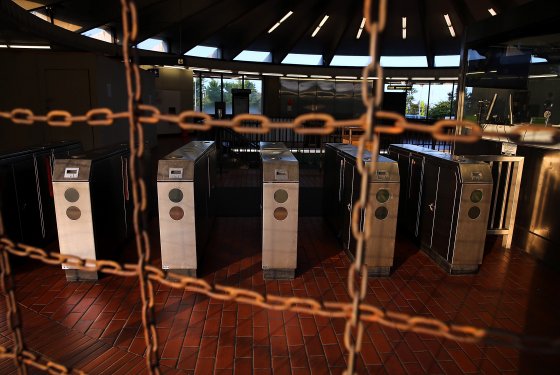
BART Strike Shows Privatization’s Dark Side:
Just compare these two reactions to the BART strike. One is from an executive of a ride-share company called Avego, which allows drivers to open up their cars (for a fee) to strangers looking for a lift:
“All you need to do is book a trip from San Francisco to wherever you’re going home for tonight or every day this week there’s a strike,” Paul Steinberg, director of Americas for Avego, said in an interview on “Bloomberg West.”
And another is from a working-class Oakland resident who uses BART to get to work every day:
Ilysha Kipnis of Oakland expected limited BART service, not zero service. Because buses and ferries were jammed, she decided to take a bus back home to wait out the traffic.
“We’re so reliant on public transportation,” said Kipnis, who works at a salon in San Francisco. “Hopefully, (BART directors) understand how much we need the trains to run. … I really need it.”
Notice the split here. The tech executive assumes that people who are stranded by BART can simply arrange for an alternative way of getting to their destination. (Incidentally, his company is also the one running a helicopters-for-commuters promotion to take advantage of the BART strike.) But the Oakland resident doesn’t work at Google or Facebook, where free shuttle service is provided, and she can’t easily get herself around by car. For the tech executive, a BART strike is an annoyance. For the salon worker, it’s a threat to basic existence.
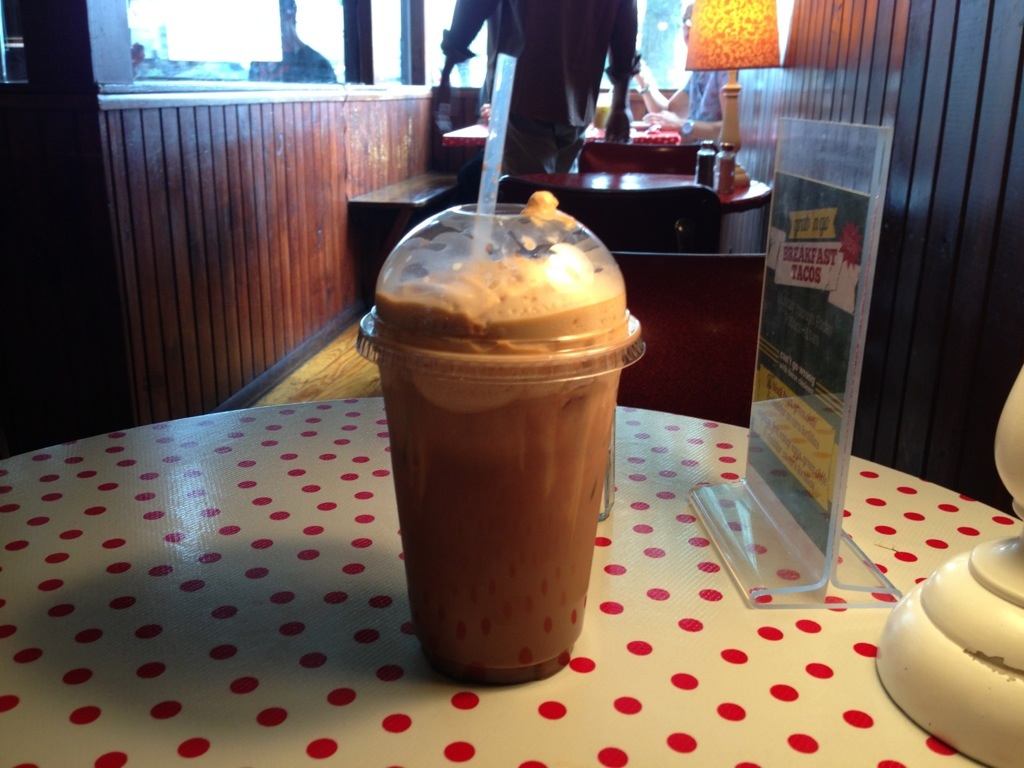
My favorite coffee shop in southern Illinois is Longbranch in Carbondale. Well it used to be, or maybe it still is by default. I don’t know. It’s different. It’s a very different place that I fell in love with back in high school. I know I’ve changed in the past 20 years, but my tastes on coffee shops hasn’t.
Basically, what was once a coffee shop or “coffeehouse” as Longbranch puts it, is now a vegetarian cafe. It’s not like Longbranch is doing a bait and switch, it says “vegetarian cafe” right on their sign.
Back on 1993 or 1994 when my friends first started going to Longbranch, it was dark with candles in the tables, a bookcase of tattered paperbacks and board games, a big long table down the middle and cigarette smoke hung I. The air. I felt so grownup and sophisticated going there, talking politics and music with my friends while being surrounded by college students.
Back then the back room was a vintage clothing store. It was always dark and seemed weird and boring and a bit disturbing and pointless, so I never went in there. I still hold those thoughts about used clothing store.
Years later, the clothing store moved into the building directly behind Longbranch and the back room became the quiet smoke free section with table service for the kitchen that served quesadillas and vegetarian pizzas, and hosted open mic nights on a tiny stage. The was a big difference between the front and back rooms. The front kept its smokey and funky mystique, while the back was bright and more subdued.
Eventually, Illinois passed a law banning smoking in all restaurants &endash; which from a public health perspective is for the best &endash; and that hurt the ambiance for me, I was in the minority for thinking that back then, but I still think it. I’m sure the smoking ban changed the clientele. I know many people stayed away from the Longbranch because the didn’t want to brave the smoke to place their order. (It was a bit strange to have the smoking section in the front, but that’s how they rolled back then.)
I think it was in the early aughts when Longbranch remodeled and expanded rand reoriented the bar and expanded the kitchen. They got rid of the last recliner and couch and brought in little metal cafe tables and chairs. I think that’s around the time they started billing themselves as a cafe too. It’s probably better for business, but it’s just not the same.
It’s just not interesting to watch people eat faking’ bacon BLTs, and waiters asking if anyone meeds something. Maybe it’s because I only come back when school is out and so no one is here (Probably. Hopefully.), but this place has no appeal to me anymore except nostalgia for place that is both here and not here.
Oh well. At least Cafe Pergolessi still exists.

The “Intimacy” clothing line is an on going project about how people reveal themselves to others. The clothes feature panels that can fade from opaque to transparent by applying an electrical current. As Daan Rosengaarde put it in a recent interview, “With some people you want to show more and some people you want to show less. We thought it would make complete sense that the dress would be proactive in that: either you have control or you lose control.†To this end, sensors in the clothing monitor the wearer’s heart rate and turn the dress transparent as the rate increases.
The first version of this dress was designed back in 2009 by Maartje Dijkstra along with V2_Lab. Building on this work, Intimacy 2.0 was designed by Anouk Wipprecht in 2011. Studio Rosengaarde is currently accepting proposals for version 3.0, which will feature men’s suits that turn transparent when the wearer lies.