

Long live the 12 Galaxies.
via Catie Magee
the monkeys know all
Berlin graffiti artist Sweza has created an interesting take on street art. Since graffiti frequently gets buffed, Sweza has started taking photos of the art before they get removed. Once they are removed, he places a QR code at that location. Using his Graffyard iPhone app, users can retrieve an image of the previous graffiti on their phones. It would be interesting if multiple images are stored for the same location, if one could use Graffyard to travel back in time and see the previous graffiti in that location. Similar to the Eric Pakurar’s Chemical Warfare Project.

Schuresko one time mentioned using shared artifacts for collaboration and social network interaction. Instead of simply just clicking buttons in lists, users would manipulate representations of the activities/messages more like how one drags icons around on a desktop. He mentioned OLPC’s Sugar interface, and how other OLPC users show up as icons on the home screen, complete with icons indicating what activity they are currently engaged in. Since many of the OLPC applications are collaborative, clicking on a user’s icon will crate a shared session with him/her. Also, when users are collaborating, their icons appear huddled around the same activity icon.
I hadn’t seen anything like that interface before, especially deployed outside of a lab. I thought about that recently when trying to simply share a folder on my computer with Ming’s was an exercise in frustration. (Either we couldn’t log in to each other’s machines, or the network link would collapse immediately after beginning the transfer.)
Later, I saw an ad for Microsoft’s Kin phone. It interface (shown above, you have to click around on their link unfriendly site to find the video yourself) seems pretty novel. The user is initially presented with a graphical life stream. From this, they can drag items down to the area immediately below the stream (the “Kin Spot”) to share them with people in their address book. Again, destinations are selected from a graphical stream and dragged to the spot. Tapping the spot allows the final message is edited and then sent.
It would be interesting to create an interface like this for Diaspora, if that ever gets off the ground.
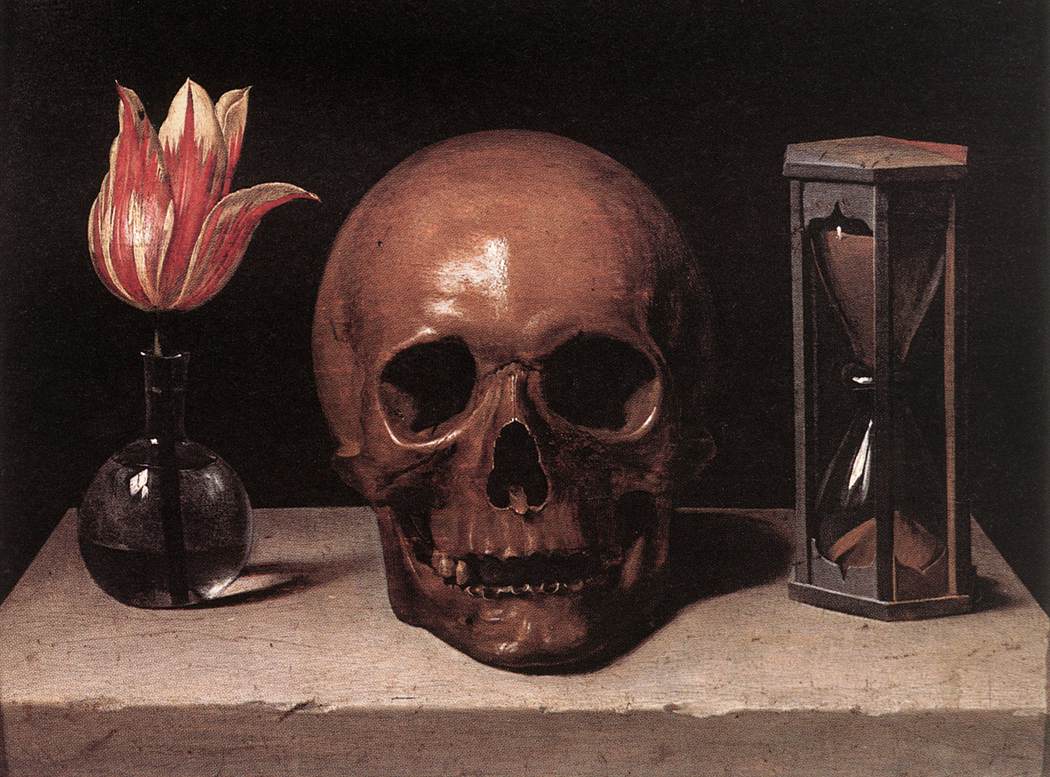
While going through my RSS feeds, I noticed that the last update from Graffiti Research Lab was memorial to the death of one of their members, Florian Hufsky.
I have no idea who he was. What is interesting though, is that the memorial linked to eight of his websites/accounts. He died on 12/16/2009, and his last tweet was on 12/02/2009 at 1:11pm. He still has 255 followers. Mostly I suspect because unfollowing an orphaned account is more costly than just letting it be. Although, I’m sure some might keep following it out of sentimental reasons.
That got me thinking about the detritus of life. It’s depressing to think that most of our “important” possessions are going to end up in the dump, simply because our survivors already have their own “important” possessions. But now we’re living significant parts of our lives online. Gone are the days letters, replaced by emails, forum posts, and social networks. (At least Twitter is safe… sort of.) Spread out across countless Internet sites and abandoned password protected accounts, the detritus is left. Even in life this stuff builds up. An abandoned Friendster account here. An Orkut account that you can’t log in to because of a database change there. A rarely used Hotmail account over there.
NPR’s All Things Considered recently aired a story about a dead Fodor’s Online user, Robespierre. Once a very active and respected contributor, he mysteriously disappeared from the forums, until someone confirmed the suspicions, he was dead. Now his posts live on in a database somewhere, occasionally showing up in searches.
Bruce Sterling got spam advertising MentoMori, a service that allows you to post instructions on how to deactivate your online presence. Why you would give all your account information to an unknown third party, I don’t know. If you really want something like that. Just put the information in a safe deposit box, and and leave the key with an attorney. (Of course, something like the old Man Show skit, where your death alerts “cleaners” to make your life look less embarrassing (e.g. replacing your porn collection with the Bible), might be more useful.)
I really doubt that anyone would use a service like MentoMori, but maybe something like this should exist. At least in an attempt to save some of our papers for our descendants dig through and occasionally laugh at. Instead, it will all be lost, and our own personal Digital Dark Age will begin.
People will often want more information than they can actually process. Having more information makes people feel that they have more choices. Having more choices makes people feel in control. Feeling in control makes people feel they will survive better.
— The Psychologist’s View of UX Design by Susan Weinschenk
versus
Autonomy and Freedom of choice are critical to our well being, and choice is critical to freedom and autonomy. Nonetheless, though modern Americans have more choice than any group of people ever has before, and thus, presumably, more freedom and autonomy, we don’t seem to be benefiting from it psychologically.
— Barry Schwartz, “The Paradox of Choice: Why More Is Less”, 2004, Chapter 5
via Unknown 8 Bit
Japanese Bug Fights is a website dedicated to invertebrate cock fighting. It’s videos of two bugs fighting to the death. I watched some of them. The video above is Round 15: Japanese Hornet vs Scorpion. I have to say, I felt a bit uneasy watching it. Kind of like watching something off of rotten.com . Although, if i learned anything out of reading the ethics standards for high school science fairs, you can do ANYTHING to a invertebrate, and it’s all good.
Mark, pointed out that “the Japanese love bugs.” He says that Pokémon’s success can can be traced to cultural phenomenon. He pointed to the documentary The Beetle Queen Conquers Tokyo (trailer), which chronicles Japan’s pet bugs. Beetle Queen is on the festival circuit, but there isn’t a Bay Area screening scheduled yet.

The SF Fine Art Fair is this weekend at Fort Mason in SF. Tickets are $15. In all honesty, I don’t know much about this. Zer01, presenters of the 01SJ Biennial are sponsoring an entrance, so there should be something there beyond what you’d normally expect at a “fine art fair.”
UPDATE: Thu May 27 18:04:25 PDT 2010
Photos. I call special attention to Popperceptual by Patrick Hughes.

Just a reminder, Maker Faire is this weekend at the San Mateo Fairgrounds. 10 am to 8 pm, Saturday. 10 am to 6 pm Sunday. $20 adult, $10 student (with valid id), $5 kids.
Schedule is packed. I’d recommend Trisian Shone, and the Raygun Gothic Spaceship, which just looks amazing.
I doubt I’m going to make it this year. Instead, I’ll be attending the SF Fine Art Fair.
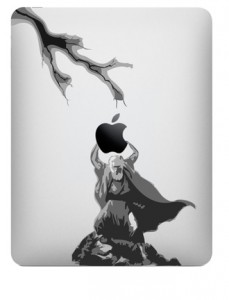
Vinyl stickers for MacBooks isn’t new. Etsy lists 1075 results. Of course many of them aren’t that good, but I do like the ones that integrate the laser cut apple in a clever way, like Moses on the Mount from above.
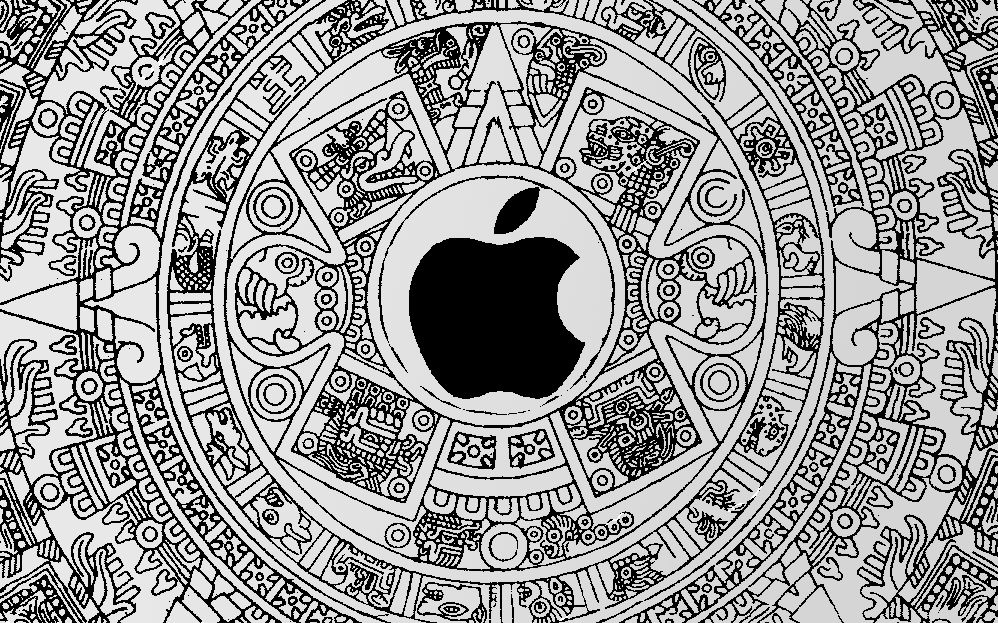
A while back, I thought about laser etching my laptop. I thought about placing the apple in the center of the Aztec calendar. Ultimately, I decided against it because there just isn’t enough room to really show what the motif is.

Wow. No this is big. As Richard Ebright, molecular biologist at Rutgers, said, “This is literally a turning point in the relationship between man and nature. ”
Scientists at the J. Craig Venter Institute, created a synthetic DNA strand, implanted it into a gutted bacterium, and got it under go mitosis. The press is billing this as “synthetic life,” but it’s not. Not yet. You still need a natural cell. How long it will take to create the first fully synthetic organism I don’t know. I’m sure someone is working on it though.
According to NPR, the hard part of creating the synthetic DNA was making it long enough. Previous technology could only stitch together a few hundred base pairs, while a viable DNA sequence needs millions. The trick was to build small fragments and then place the fragments into yeast to do the final assembly.
So that they could prove that the synthetic DNA duplicated correctly, the team added a set of watermarks to the end of the DNA strand. The watermarks were the names of everyone on the 46 person team, along with the James Joyce quote, “to live, to err, to fall, to triumph, to recreate life out of life.” Since each base pair encodes two bits (One bit for the nucleobases (adenine-thymine versus cytosine-guanine), and the second for the orientation (AT/CG versus TA/GC).), and assuming the text was encoded using the 26 letters of the English alphabet, you would need three base pairs per character. Since 2^(2*3) = 2^6 = 64, you would have 41 empty encodings. This means you could encode letters, digits, and punctuation. For comparison, after removing all the control codes and lowercase letters, ASCII contains 69 characters.
I find this fascinating on two levels. First, Venter uses the words like “software” and “programming” describe this work. DNA is software, but it’s not just operating instructions, it’s building instructions. Today, we already have scientists that grab single genes from other species and splice them into other organisms, like Roundup resistant soybeans. If we can build entire DNA sequences, this implies a future organisms could be uploaded to a Thingiverse-like site, where users could download organisms. Also, if the genes and the proteome can be understood (or at least understood on a block level), it seems possible that scientists could begin to construct single cell organisms by assembling a mixture of parts, like a Lego kit.
The other thing that’s interesting are these watermarks. I love the idea of encoding messages into DNA sequences. It’s microfilm for the 21st century. One could build an entire design fiction story around this idea. You could store a message inside a person, like Leeloo, or use it in a bacteria dead drop. Of course, over time your message would be corrupted. Which makes me wonder how mutations manifest? Does the strand break and the reform incorrectly, meaning splices and flips, or what? If so what types of error correction would be needed? Simple parity checks wouldn’t work for this.
We do live in the future.