robotmonkeys

the monkeys know all

Category: installation / sculpture

  • Save the Males

    Categories:

    20130810-192805.jpg

    This is the most powerful piece of art as social commentary I’ve come across in a while.

    Via Andrew Fishman’s tumblr:

    Every year, millions of male chicks are killed, usually by gas or by feeding them into a high-speed shredder. It is inefficient to raise males to adulthood, as they cannot lay eggs. Tinkerbell [aka Looove Tinkerbell], an artist and advocate for animal rights, decided she had to speak out against this.

    In 2007, she purchased 61 male chicks (pictured above) from one of these facilities and brought them into a gallery along with a shredder. She announced that they were for sale, and that the ones that were not purchased by the end of the sale would be fed into the shredder. By the end of the sale, less than a dozen had sold. When it became clear that the artist was not bluffing, the gallery owner purchased the rest. The gallery owner was unable to care for them herself, so she gave them to the police, who gave them to a shelter, who gave them back to the original farm, where they were shredded.

    Unsurprisingly, Tinkebell has received hundreds of thousands of emails and letters about this and other pieces. However, that the mail would be directed at her is an interesting phenomenon. She did not kill any of the chicks; in fact, she offered a chance to save them. Perhaps it was her willingness to kill them in public that was so offensive; we like to pretend situations like this don’t exist.

    I would compare this to the “Trolley Problem” in psychological research. The “Trolley Problem” is a hypothetical scenario in which a person is able to pull a lever, redirecting a train from one track on which lies five people to one on which one person lies. Most respondents would pull that lever.

    The “fat man” variation is more troubling for most. This variation specifies that a person is able to slow a train down by pushing a fat man onto the train tracks, which would slow it down before reaching the five people on the tracks. Practically, the scenarios are equivalent (one person dies to save five) but it feels very different. The difference is in the act itself. We are fine with allowing people to die, but killing is another story, even if the end result is exactly the same.

    I think that this active/passive dichotomy is why Tinkebell receives so much hatred from the animal rights community. As a society, we’re more accepting of a company that kills millions of chicks every year than a woman who gave the opportunity to save a few dozen before returning them to their fate.

    The Trolley Problem is an interesting comparison, and I do think there’s something to this line thinking, but when I read about this I immediately thought of executions instead. The idea that these chicks would be tossed live into a wood chipper isn’t what offended the gallery owner, it’s that the were going to be tossed into the wood chipper in front of an audience.

    Executions, or to use a less euphemistic term: state sanctioned homicide, were performed in town squares in front of large audiences since the beginning of time. No doubt to spread fear and to intimidate the populous. Eventually, these spectacles became entertainment. (On a personal note, my fifth grade teacher, Mrs. Fuller, talked about her father and a friend of his attended the the hanging of Charlie Birgir. It was the big event in Southern Illinois, and they left early and brought a picnic lunch in order to get a good spot. She wanted to go too, but her father wouldn’t let her. Apparently watching a man die wasn’t appropriate for a little girl.) This is unseemly. The “carnival in Owensboro” has been credited with ending public executions in the United States. Now in the “civilized” world where the practice continues, they’re performed behind closed doors with only few witnesses. In Japan, executions occur in secret. In China, the occur behind prison walls with rarely more than only prison officials watching. “Barbaric” societies on the other hand, like Saudi Arabia, Yemen, Iran, North Korea, Taliban Afghanistan, and other areas ruled by warlords have audiences. Don’t burn someone at the stake. Don’t behead them. Don’t bash someone’s head in with a rock. Don’t hang them. Make it photogenic. Make it look like they’re just falling asleep. Don’t make us face the cruel truth of what we do and allow to happen. And above all, don’t make us face the ugly reactions to this in our society. We’re civilized and better than blood thirsty savages.

    This is a delusion, and Tinkerbell called society out on it.

    Previously. Previously. Previously.

  • From the Subway to Your Living Room

    Categories: ,

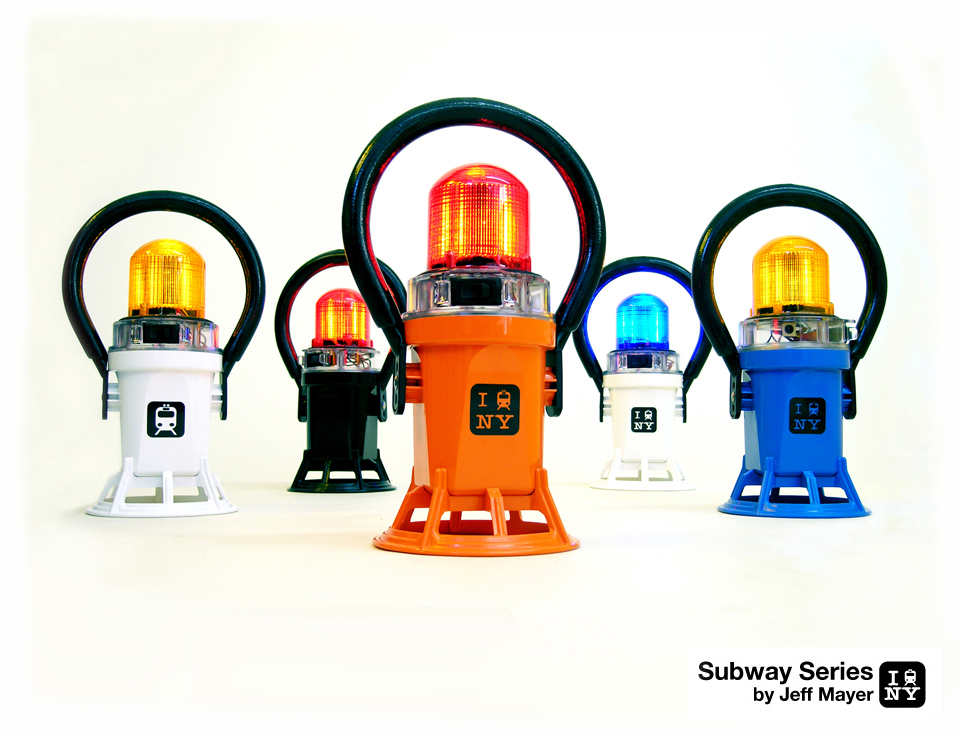
    Here’s an article I’ve sitting on for a while. These reclaimed NYC subway lights from Jeff Mayer and 718 Made in Brooklyn These were originally sold through >Voos with the hand lights being $150 each, but now they’re gone.

    The light up bench never really interested me. I know it’s iconic signage, but whatever. The shape of hand lamps is what was cool to me. There’s something about the flare at the base and the big loopy handle that appeals to me.

  • Chandelier Tree

    Categories:

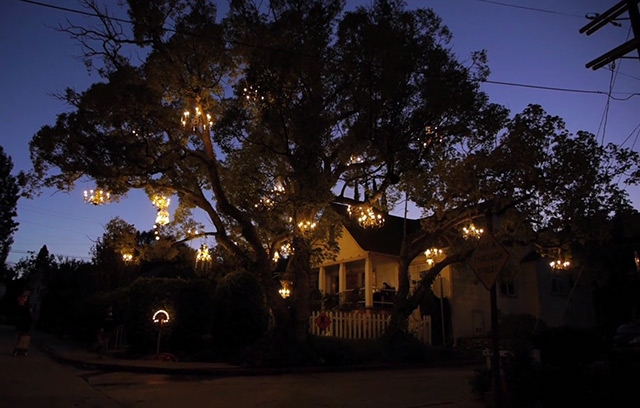
    For the past six years at the corner of West Silver Lake Drive and Shadowlawn Avenue in Los Angeles Adam Tenenbaum has been hanging and lighting chandeliers from a large tree in his front yard. With about 30 chandeliers in the tree now, it looks fantastic after dark.

    (more…)

  • Stair-Rover

    Categories: ,

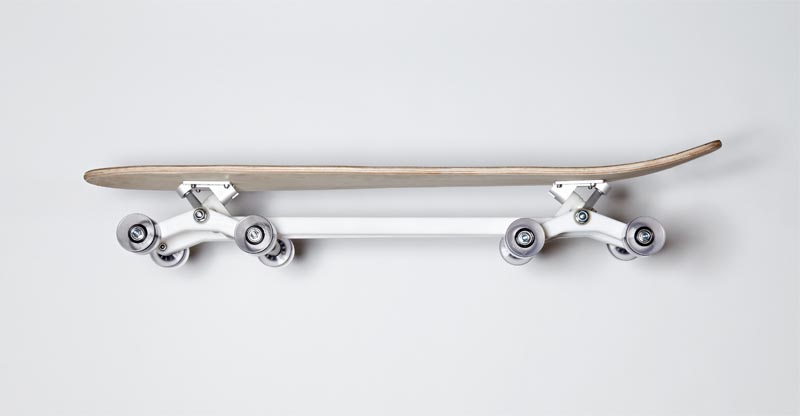
    Po Chih Lai‘s 8-wheeled skateboard, the Stair-Rover, allows riders to glide down stairs through the use of independent v-shaped articulated arms mounted to the trucks. For £170 (approximately $258 USD) you can get your own stair-rover through Kickstarter. It looks quite cool going down the stairs, and I like the look of the trucks. They remind me of the articulated wheels of the Mars rovers. I briefly considered buying a stair-rover, but then thought better of it, since I don’t actually skateboard.

  • Angler Fish

    Categories:

    Michigan sculptor Justin LaDoux, is selling his his angler fish sculpture. A collage of knives, shovels, bicycle parts, and other found pieces of metal, the sculpture is four feet wide, five feet long, and five feet tall, and features motion activated lights.

    I don’t know really anything about this artist. I do know that this piece was originally part of a set displayed at the 2010 ArtPrize in Grand Rapids, Michigan. In an interview during the ArtPrize, you can see a similar loose jaw fish and a squid.

    (more…)

  • Lead Type

    Categories:

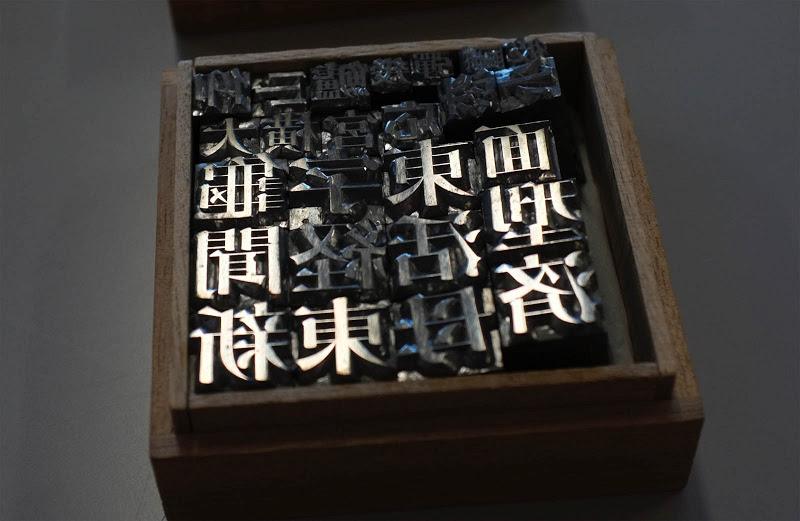
    I’m a sucker for movable type. (The lead blocks, not the software, I have no opinion on the software.) The idea of assembling little blocks to make words and sentences makes my heart flutter. I don’t know why. I guess it’s sort of like legos. I love the large trays holding the letters, and I particularly like how the bins are different sizes depending on the character distribution of the language. As I read about how movable type was used and evolved over the years, I gained a greater appreciation of typography. Ligatures, kerning, why periods go inside quotation marks, and why it’s as irrelevant today as the creation MLA’s parenthetical citations 30 years ago.

    I don’t think I would have the patience to use movable type. Laser printing is just too easy, and hot metal typesetting seems like cheating. Although in the world where movable type was common, U certainly would have used it instead of carving individual presses for every page.

    via Dark Roasted Blend: Intricate Japanese Movable Type Sets

  • LED Streetlight

    Categories: , ,

    Keha3‘s Pavel Sidorenko, Tarmo Luisk, Margus Triibmann collborated on this led streetlight concept for LED Street. What I like about the design is how thin it is, while still looking like a modern streetlamp. What would normally be a reflector, is hinged rain cover to allow access to the lighting elements. According the LED Street site, the lighting element is replaceable and comes with different numbers of lighting strips in order to customize illumination and power usage.

    (more…)

  • Sea Buoy

    Categories: ,

    Margus Triibmann of the Estonian design studio Keha3, designed this LED lit buoy. Made of translucent polypropylene, the buoy comes a 15 meter waterproof cable. The accompanying documentation helpfully points out that by placing the buoy on land, the buoy can be used as a decorative hanging lamp or as a floor lamp when provided with an appropriate stand.

  • Coloring for Grownups

    Categories: ,

    Coloring for Grown Ups &endash; the tumblr for the book of the same name &endash; posted this picture of crayons appropriate to use for their delightfully depressing activity book. It’s swell.

    See below for an example of submitted art

    (more…)

  • RIP Carbon Motors

    Categories: ,

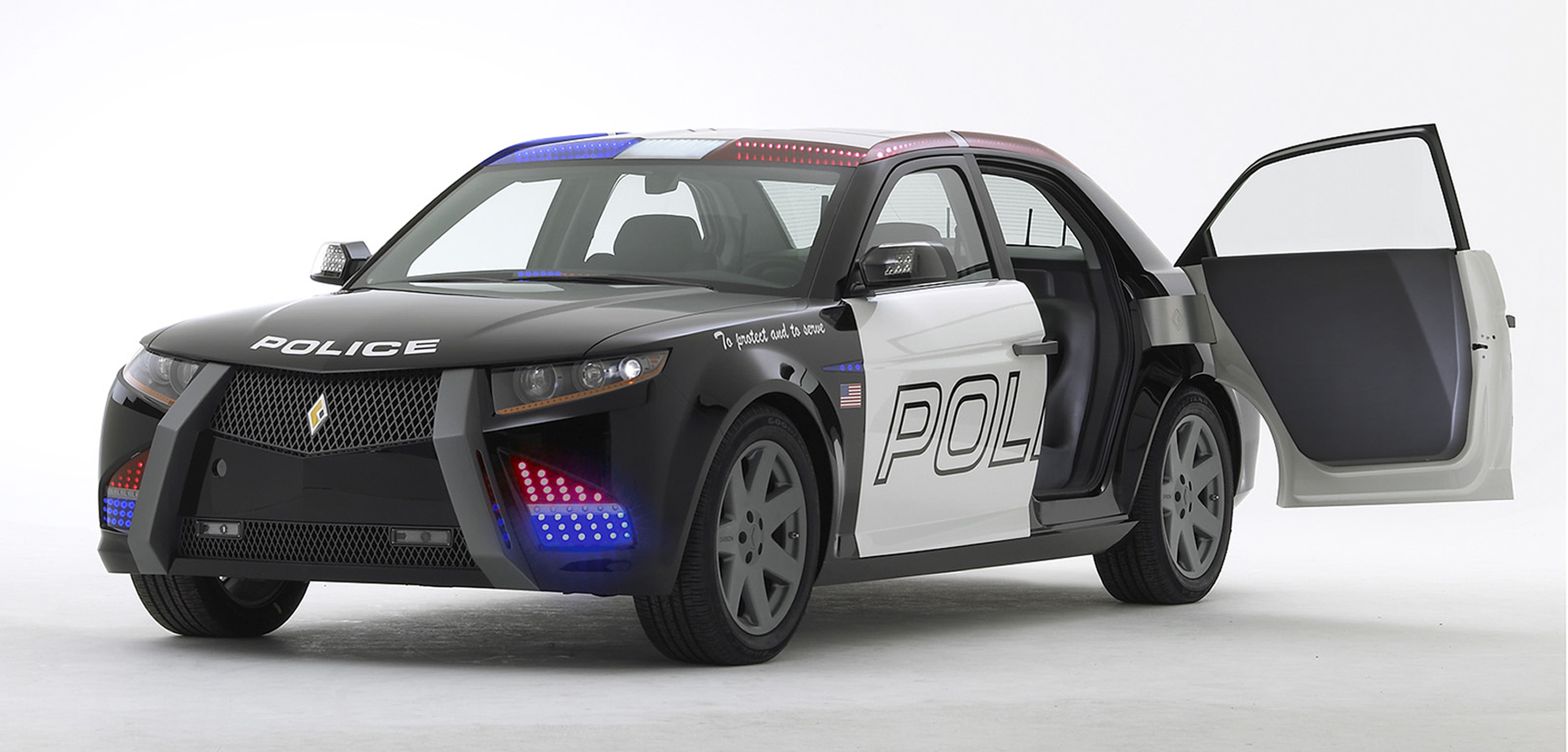
    Recently, I read some sad news, Carbon Motors has folded. I can’t say I’m surprised. Starting a car company, especially a niche car company is hard. It is sad because E7 concept seemed really thought out, and that’s what I liked about it. I’m a bit disappointed I didn’t write more about Carbon Motors three years ago when they first showed up on my radar. The E7 was was billed as the only purpose built police car in the world. The front seats had cutouts for utility belts and a sucky to blow cool air on the driver’s neck. The rear seats had suicide doors and seatbelts rigged with the latches records the outside so that officers didn’t have to lean over prisoners when securing them in the back. The car also was supposed to come full of gadgets like nightvision cameras and NBE detectors (no doubt to enable police departments to offset the cost of the vehicles through antiterrorism grants).

    Apparently getting enough orders and/or bringing the manufacturing cost down for profitability became a problem for Carbon, because they eventually ditched the patrol car, and started shopping around a rather boring paddy wagon.

    Sadly, Carbon Motors’s online presence is completely gone, save for the wayback machine.

    A salvaged picture of the paddy wagon is after the jump.

    (more…)