robotmonkeys

the monkeys know all

Category: architecture / furniture

  • Hanger One Still On the Chopping Block

    Categories: ,

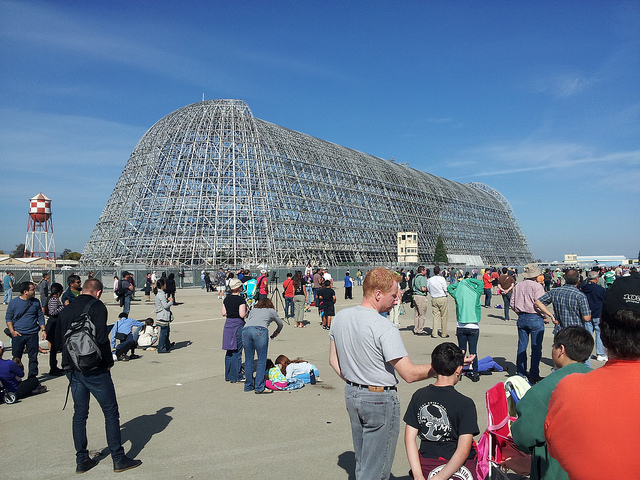
    NASA’s inspector general is still gunning for Hanger One. Essentially, the IG and NASA HQ are upset with Ames Research Center’s leasing of property to private groups such as Singularity University, Airship Ventures, and the Google Triumvirate, and insist that future leases correspond to “current or future mission[s]”, and to sell any properties that can’t be leased. I believe the IG is referring in particular to the airfield itself.

    Not having any particular knowledge beyond what I find in the local papers, but that seems a bit strange. I thought NASA Ames was one of the centers that was researching heavy lift airships for cargo transport to remote areas, and that Hanger One was intended to be used for these airships.

  • TV Bar

    Categories:

    The liquor cabinet looks pretty cool in that 60s retro look, but I can’t imagine actually wanting a room decorated like that.

  • iDesk

    Categories: ,

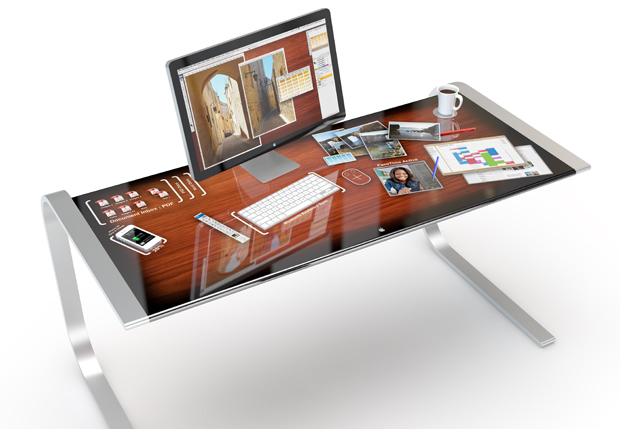
    Mac|Life’s concept iDesk seems plausible and very expensive. In their concept, Mac|Life images a desk with a multitouch display and bluetooth connectivity. Phones, laptops, and other devices when placed on the desk can have their data accessed and transferred though on desk icons.

    It’s a striking design, having your desk be one giant interactive flat panel display. The technology to do this certainly seems ready. Giant retina displays, and multitouch controls exist. (Well retina displays exist, scaling them up to 6 feet by 4 feet, maybe not.) The real problem seems to be more of software rather than hardware. You don’t even really need one display like that. Simply more intuitive graphical and tactile syncing with current separate displays would be nice. I imagine transferring documents from desktop or laptop computer to a tablet by touching the screen displaying the document with spread open fingertips, making a fist (think grabbing) and then touching the screen of the destination device. Of course thinking of local device storage is so 20th century. Everything is going cloud with continuous syncing.

  • More Microbrial Home

    Categories: ,

    After coming across the Bio-Light, I felt I needed to highlight a few other projects in Philips’s Microbrial Home.

    According to Philips, the centerpiece of the home is a kitchen island with an integrated bioreactor. The digester is connected to the garbage disposal so that decaying plant and animal matter can be fed to bacteria that then produces methane which is then burned for fuel. It’s an interesting idea, but I find it hard to believe that the the amount of energy created from the scraped plates of a few dinners could actually do anything useful, certainly not anything that could noticeably effect the power demands of the home.

    The main purpose of the bioreactor – besides fueling the Bio-Light – is to power the the dining table. An herb garden grows above a table that has integrated terra cotta evaporation coolers. What’s the methane for, apparently to warm the tabletop. Strange I know. Still, the table does look pretty striking with plants and the storage.

    (more…)

  • Bio-Light

    Categories: ,

    Part of Philips’s Microbial Home concept, the Bio-Light is a group glass vessels containing a bioluminescent bacteria. The bacteria is suspended in a nutrient bath that is provided from either a biodigester, or just a boring old tank.

    Seeing the photos of the lamp, I wondered how much light was actually generated. I still don’t know. I don’t expect the Bio-Light to be useful to read by or anything, but I would expect it to be bright enough to be obviously glowing even in a room that’s moderately lit. Looking into bioluminescent kits, the bacteria in the lamp might be vibrio fischeri. Bacteria isn’t a bad choice for bioluminescent lamps since unlike diatoms, they glow continuously, as opposed to only when disturbed. Another possibility would be to use fungi like armillariella mellea (aka foxfire), but from what I’ve read most fungi are very dim. Mycena chlorophos might be a bit brighter, but Im having problems finding where to purchase it. Personally, I’d feel better having a bunch of mushrooms on my wall rather than bacteria.

    Previously. Previously

    (more…)

  • Plant-In City

    Categories: ,

    Designed by Huy Bui, Jon Schramm of HB Collaborative and Carlo Gómez de Llarena have designed a set of interlocking cedar boxes to create an automated terrarium. Called Plant-In City, they are currently running a Kickstarter Campaign to gather funding to finish prototypes and to ramp up production.

    The system consists of three different cedar frames. The main frame is the “light frame”, and features LEDs mounted along the top rectangle. A “soil” frame a simple box that contains dirt along with sensors to monitor light, humidity and moisture. The last frame is the “water frame” and it is made up of a water tank along with tubing and a solenoid valve to control water flow. The sensors, lights, and valves are connected to an arduino that wirelessly connects to the Internet. Through either the Plant-It City website or mobile app, owners can monitor and control their frames via cosm.com‘s API. The sensors not only alert the owner to changes in the terrarium, but also are used to drive an audio and visual effects for in-person visitors of the system.

    Previously.

    (more…)

  • Salt Air Pavilion

    Categories: ,


    Salt Air Pavilion, Great Salt Lake, Utah

    I’m always delightfully surprised what you can find in the public domain and the commons.

    via Dark Roasted Blend

  • Now You’re Playing with Gyroscopes!

    Categories: ,

    Royal Caribbean’s Radiance of the Seas has a gyroscopically stabilized pool table.

    That is pretty cool.

  • Kai Table

    Categories: ,

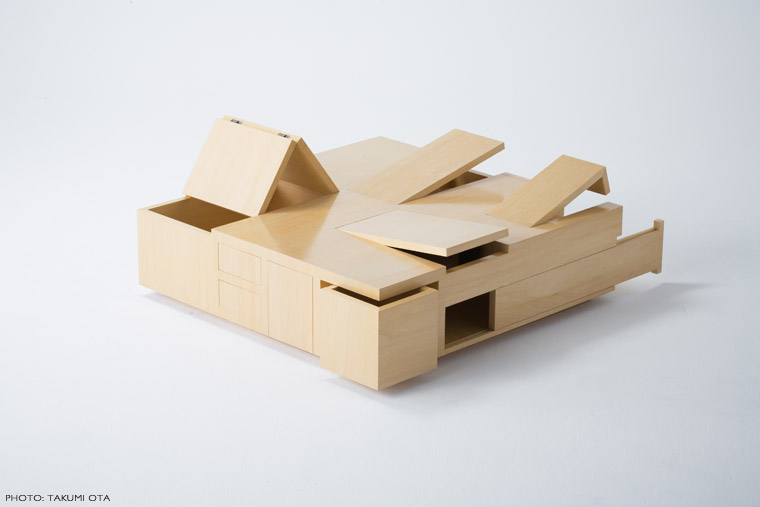
    Designed by Naoki Hirakoso and Takamitsu Kitahara, the Kai Table has multiple internal compartments, but with the twist that each of them takes the form of a hidden compartment as seen on other furniture.

    I’ve always been a sucker for hidden compartments, and although the location of the compartments are quite obvious given the size of the piece, it still presses all the right buttons for me.

  • A Path in a Forest

    Categories: ,

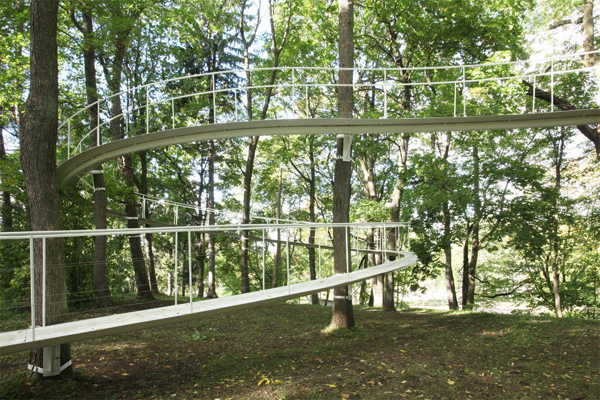
    Architecture firm Tetuo Kondo, installed A Path in a Forest, elevated walkway through part of the Kadriorg forest located inside Tallinn, Estonia. 95 meters long, it is supported solely through straps fastened to the trees. It was created as part of LIFT 11, a “festival of urban installations.”

    At first I thought this was a wooden walkway, but it looks like it’s entirely metal, which is kind of disappointing, but probably inevitable because of weight restrictions. It is also very reminiscent of their 2010 Venice installation, Cloudscapes, only outdoors.

    (more…)